

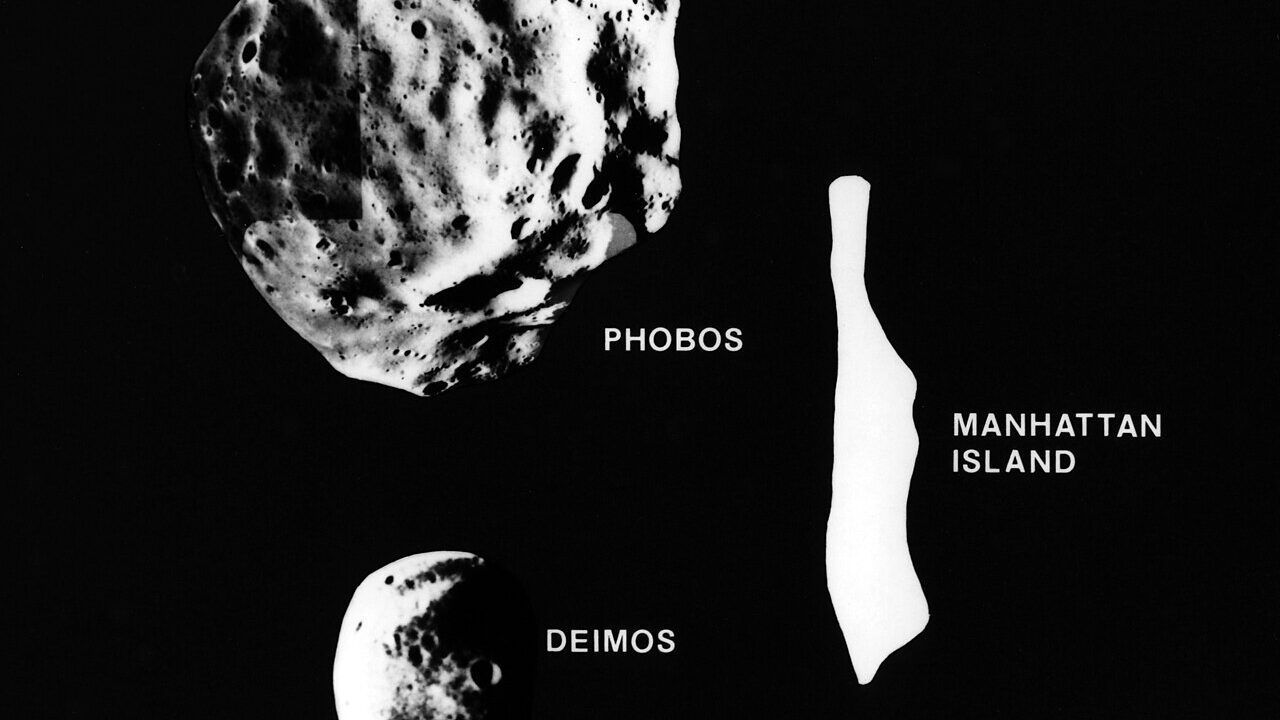
How did Mars get its two small, lumpy moons? The Martian Moons eXploration mission, led by Japan’s space agency JAXA with partners including NASA, the German Aerospace Center (DLR), the French space agency CNES and the European Space Agency, is designed to answer that question by visiting Phobos, landing a small rover on it and bringing a sample of its surface back to Earth. This animation from DLR, a mission partner, walks through the planned journey: launch from Japan, the cruise to Mars, exploration of Phobos from orbit and on the surface with the Idefix rover, sample collection by the mothership and the long return to Earth. The mission is scheduled to launch later this month.
The mission is built around a question that has resisted decades of telescope work: were Phobos and Deimos captured asteroids, or debris thrown off Mars by an ancient impact? A returned sample should settle the debate, and would give scientists pristine material from the Martian system without the cost and risk of landing on Mars itself. The Idefix rover, built with the French and German space agencies, is expected to scout ahead and test the surface before the mothership collects its sample for the long flight back to Earth, currently planned for the early 2030s.
Video credit: DLR, the German Aerospace Center (official channel). Embedded from YouTube; no footage was downloaded or re-uploaded.
Related reading: Watch: Brazil Voters Head to Runoff Between Bolsonaro and Lula · Watch: News Outlets Sue Over White House Access Ban · Watch: NASA/JPL Explains Curiosity Rover Panorama From Mars