


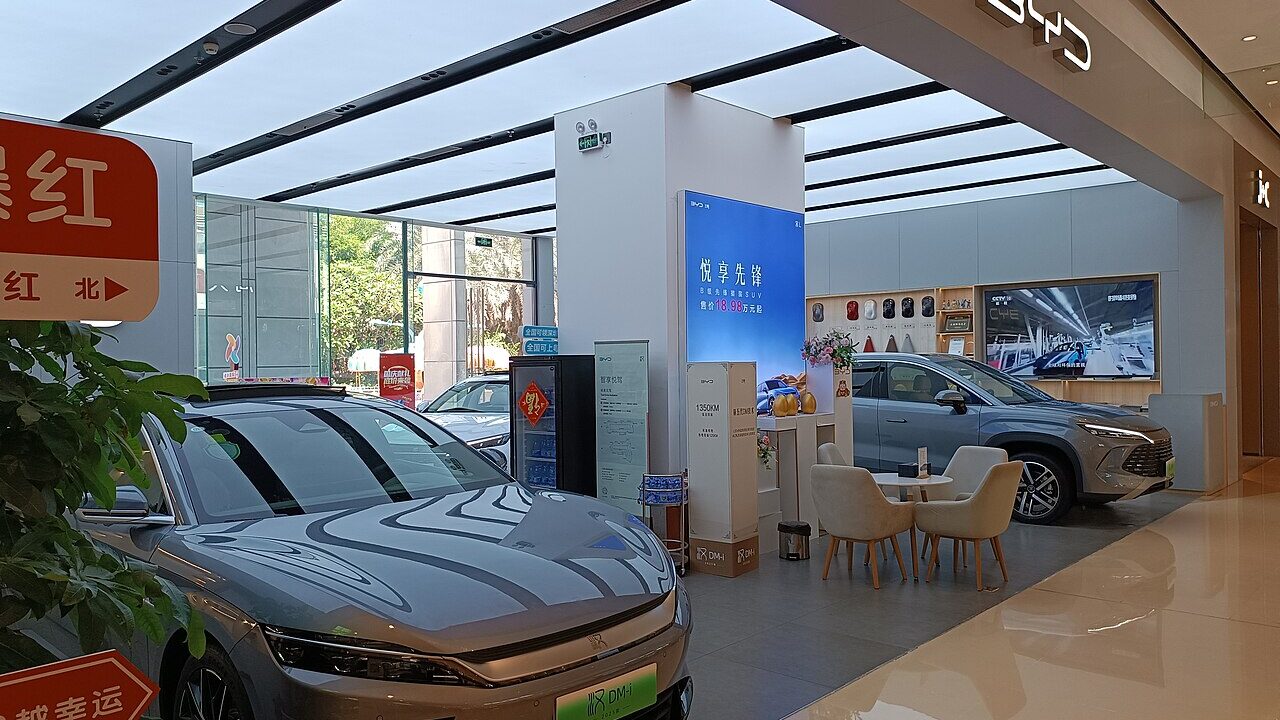
China’s shift to electric cars reached another milestone in September, when new energy vehicles accounted for a record 67 per cent of all passenger-car sales in the world’s largest auto market. But the headline number hides an uncomfortable truth: the record was driven less by an electric boom than by the collapse of petrol.
According to figures from the China Passenger Car Association, retail sales of new energy vehicles totalled 1.084 million last month — down 16.7 per cent on a year earlier, the ninth consecutive monthly decline. Yet because the overall market shrank far faster, with total passenger-car sales down 28 per cent to 1.618 million, the electric share surged by 9.1 percentage points to its all-time high. Pure petrol-car sales crashed by roughly half.
Battery-electric vehicles again outperformed hybrids, with 765,000 BEVs sold against 232,000 plug-in hybrids and 88,000 extended-range EVs. BYD led the market with 246,816 sales and a 22.8 per cent share, ahead of Geely and Leapmotor. Tesla climbed to fourth place with 64,837 sales, up nearly 30 per cent on August, though still below last year’s level.
The Paradox Behind the Record
Past records in China’s electric transition were powered by surging EV volumes; this time the milestone belongs to the petrol crash. The traditionally strong September selling season fell short of expectations, with domestic sales of conventional fuel-powered cars nearly halving and weaker overall demand weighing on manufacturers. Even so, the structural trend keeps grinding forward: the year-to-date electric share now stands at 58 per cent, with pure battery electrics at 39 per cent. If the trajectory holds, analysts expect China’s final 2026 share to top 60 per cent.
What It Means for the Rest of the World
For American readers the story cuts two ways. Chinese EV exports surged 163.5 per cent to 558,000 units in September, intensifying pressure on established carmakers — and the same month saw US technology giants stake their own claims in the global technology competition. There are also uncomfortable questions for crude oil markets, as a permanently shrinking petrol fleet in China eats into long-term fuel demand. A detailed breakdown of the September figures lays out the model-by-model data behind the milestone.