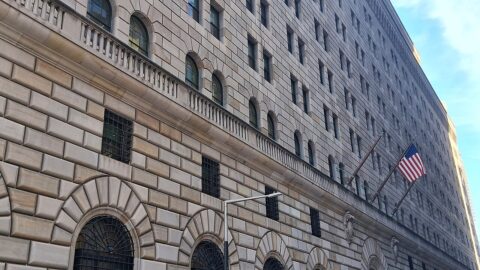
Two dissents at the Federal Reserve’s October meeting have done more than register disagreement. They have reframed a decision to hold rates as a pause, with the market now treating a December rise as likely rather than possible, even though the chair of the central bank refused to promise one.
The Federal Open Market Committee voted 10 to 2 to keep the target range at 3.75 percent to 4 percent on October 28, pausing six weeks after its September rise. Governor Lisa Cook and Cleveland Fed President Beth Hammack both preferred a quarter point increase at that meeting. The statement upgraded growth to expanding at a strong pace and repeated that inflation remains elevated, language that, combined with the dissents, pushed futures pricing for a December rise sharply higher in the hours after the decision.
Chair Kevin Warsh told reporters that politics played no part in the decision, which came six days before the midterm elections, and that he did not think the economy was too hot, although most colleagues disagreed with him. He argued that inflation can return to 2 percent without slower growth or job losses, and that higher rates are already tightening credit. His central message, however, was about timing: the committee needed more information before deciding, and the coming weeks would supply it.
What the dissenters are signalling
A dissent in favour of a rise is a specific kind of signal. It does not change policy on the day, but it tells markets that at least part of the committee already sees the case for tighter policy as made. Some analysts have argued that other officials who voted with the majority may also favour a December rise, voting to hold in October because they wanted one more round of data first. That reading helps explain why market odds for December rose after a decision to do nothing.
The data since then has kept the argument alive. September consumer inflation came in at 3.7 percent from a year earlier, edging back toward a three year high, while the Fed’s preferred PCE gauge rose to 3.6 percent headline and 3.1 percent core. Energy prices, lifted in part by the conflict affecting Iran, accounted for much of the monthly increase, and officials have also cited heavy spending on artificial intelligence infrastructure as a force pushing up activity without a matching rise in employment.
The calendar that will settle it
The committee meets again on December 8 to 9, with the October jobs report due on November 6 and the October inflation report due on November 10 in between. Warsh also said one 2027 meeting will become a strategy session with no rate decision, leaving seven rate setting meetings that year. For now, the two dissents stand as the clearest guide to the committee’s direction: a hold in October, with the door to December left deliberately open.