

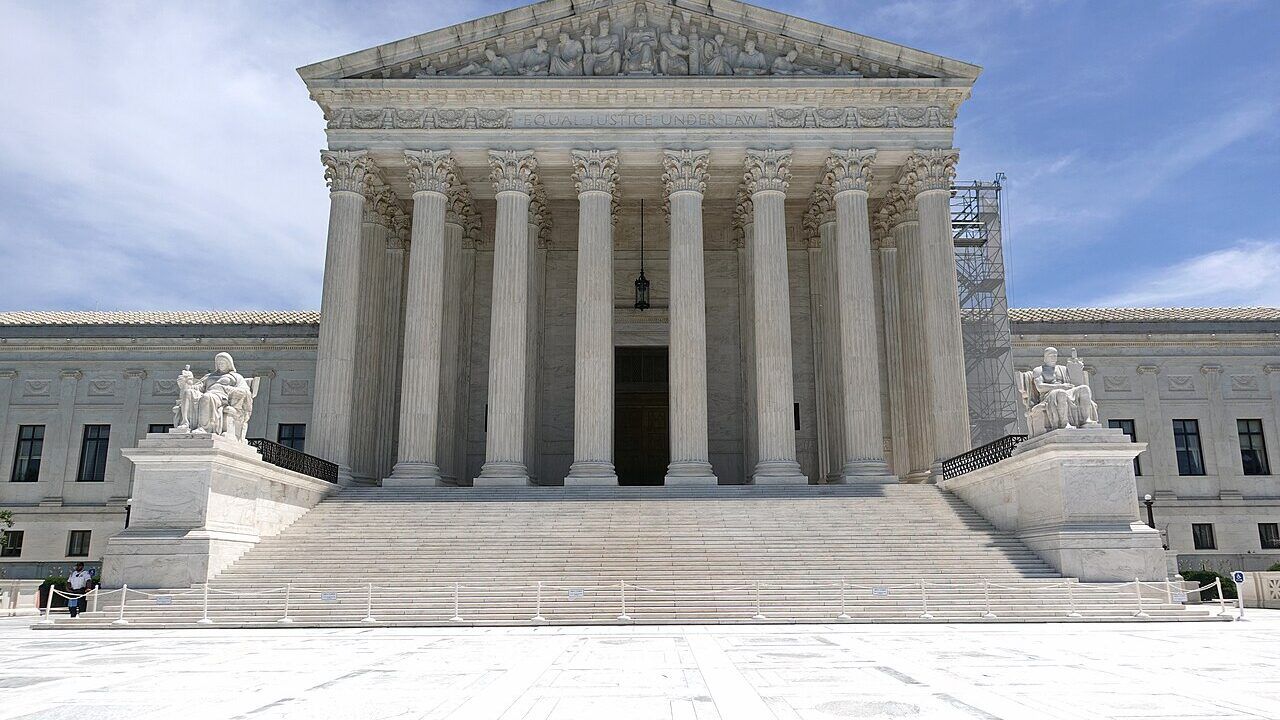
The United States Supreme Court has stepped into the fight over political advertising rates just weeks before the November midterm elections, giving the Federal Communications Commission a temporary reprieve from a court-imposed deadline in a Democratic challenge to the agency’s new ad policy.
Chief Justice John Roberts on Thursday lifted a lower court’s order that had given the FCC until Friday to rule on the challenge. The move, known as an administrative stay, is typically a brief pause that gives the justices more time to consider a formal request to block the lower court’s action. Roberts ordered the Democratic challengers to respond by Saturday.
At issue is the so-called lowest unit charge rule. For decades, broadcasters have had to offer legally qualified candidates the cheapest rate they charge any advertiser for the same class and amount of time during the windows before primary and general elections. In March, the Republican-led FCC modified the rule so that party committees can also pay the lower TV and radio rates long available to candidates themselves.
Democratic candidates challenged the change, arguing that it distorts the economics of campaign advertising in the middle of an election cycle. The Richmond-based 4th US Circuit Court of Appeals has accused the FCC of repeated delay tactics and stressed the need for an urgent ruling with the November 3 midterms approaching. The FCC, joined by two Republican committees, asked the Supreme Court to halt the lower court’s deadline order.
The political context is not subtle. The FCC currently has a 2-1 Republican majority and is chaired by a close ally of President Donald Trump, whose party is trying to retain control of Congress. Reports on the case note that major Republican committees head toward the midterms with a cash advantage over their Democratic counterparts, which makes access to cheaper broadcast rates especially valuable: money saved on airtime can be spent on more airtime.
This is the second time in recent weeks that the Supreme Court has addressed the FCC’s policy, an unusual level of attention for a broadcast advertising rule. The case also illustrates how election law now moves at campaign speed. A rule written in March, challenged in court, argued through the autumn and now paused by the chief justice could still shape how much advertising voters see in the final stretch, even if the underlying legal question is not resolved before election day.
Roberts’ stay does not decide who is right. It decides timing, and in an election, timing can be the decision. If the full court leaves the stay in place, the FCC will not have to rule on the Democratic challenge this week, and broadcasters and campaigns will keep operating under the modified policy while the litigation continues. The Democratic challengers’ response, due Saturday, is the next step.
For local television and radio stations, the fight is a reminder that campaign season is also a regulatory season. The rates they must offer, and to whom, are set in Washington. Right now, Washington’s answer is: wait.
The lowest unit charge rule itself dates from an era when broadcast television and radio were the unquestioned centre of campaign communication, and its logic was to stop stations from charging candidates monopoly prices for the airtime they most need in the final weeks. Extending that protection from candidates to party committees is a meaningful shift, because committees raise and spend at a scale individual campaigns often cannot, especially down the ballot. That is why a technical advertising rule has drawn in the Supreme Court, two national party committees and a federal appeals court in the middle of an election: in modern campaigns, the price of airtime is a form of political power.
Related reading: CNN, MS NOW and Politico Ask Court to Keep White House Ban Blocked · Arlington Sues to Block Trump Triumphal Arch Near Memorial Bridge · Spain Calls Snap Election as Housing Crisis Forces Sanchez Gamble