

Reports that OpenAI’s annualised revenue is running at about $50 billion — below the roughly $68–70 billion previously signalled — rattled artificial intelligence and chip shares this week, in a sell-off that showed how much of the market’s AI trade rests on a small number of very large expectations.
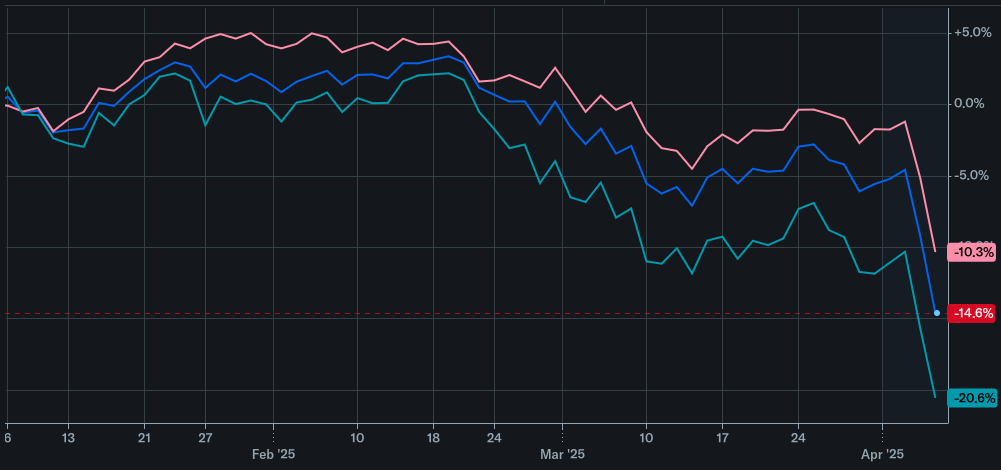
Coverage of the move cited a 1.4% fall in the Nasdaq 100, a 3.4% drop in a leading chip gauge and a 0.5% decline in the S&P 500. Those figures come from market reporting and should be read as a snapshot of a fast-moving session, not a final accounting. But the direction was clear: when the centrepiece company of the AI boom is reported to be growing more slowly than investors assumed, the whole chain — chipmakers, cloud providers, data-centre builders — feels it within hours.
The complication is that the reporting conflicts. Other coverage suggests OpenAI’s figures may reach or top $70 billion by the end of 2026. Annualised revenue is itself a slippery measure: it takes a recent month’s income and multiplies it, so it can swing with a single large contract, a pricing change or a surge in API usage. Two honest calculations, taken weeks apart or built on different definitions, can produce very different numbers.
That makes this a story about expectations as much as income. AI valuations have been built on steep, smooth growth curves stretching years ahead. A reported gap between a signalled figure and a current run-rate does not break that story, but it reprices it — and chip stocks, priced for relentless data-centre demand, reprice fastest.
For the wider market, the episode is a reminder of concentration risk. When a handful of AI-linked names carry an outsized share of index gains, one company’s reported revenue run-rate can move benchmarks that millions of retirement accounts track.
Until OpenAI publishes audited or officially confirmed figures, the $50 billion and $70 billion numbers will coexist as reports, not facts. Investors, for now, are trading the space between them.
Related reading: UNCTAD Sees World Growth Slowing to 2.6% in 2026 on Energy Shock · GST Council Scraps Arrest Powers, Raises Prosecution Threshold to Rs 5 Crore